
TSW 5: Tips For a Better Bathroom Renovation

What we prioritise when designing bathrooms
Next to kitchens, bathrooms are our most requested small renovation project. But, there is nothing small about them in renovation terms. There are almost as many trades required for a bathroom renovation as there are in a new build - in the smallest room in your home! Between this and rising material costs, the investment in a bespoke bathroom renovation is not insubstantial. That’s why it’s crucial to plan your bathroom renovation in detail before any tiles are purchased or demolition begins.
There is so much that I could share with you about design, selection of fixtures and fittings and execution but, for this article, let’s focus on our top five practical design tips for a bathroom that not only caters to your needs and supports your lifestyle but looks and feels like a dream.
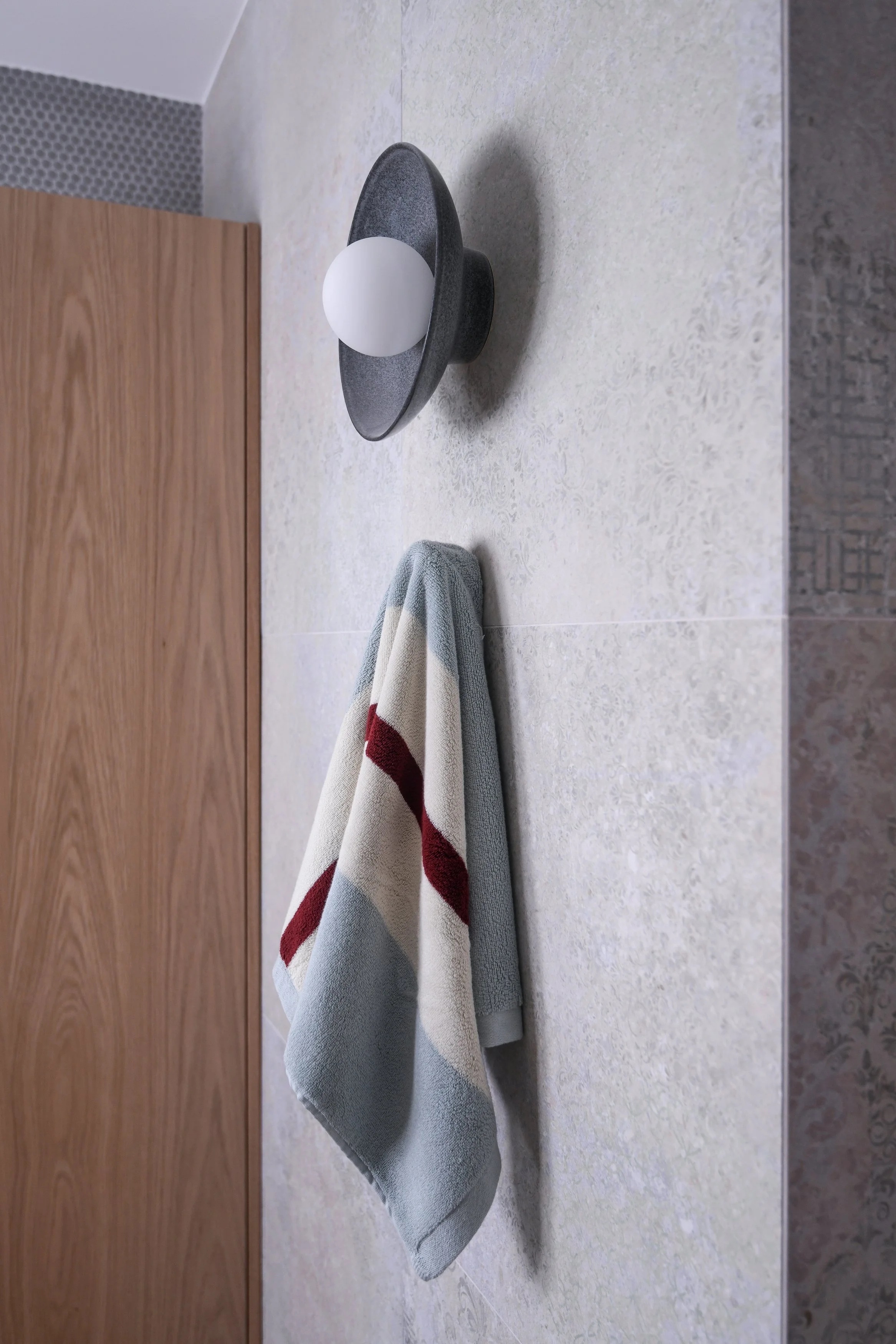
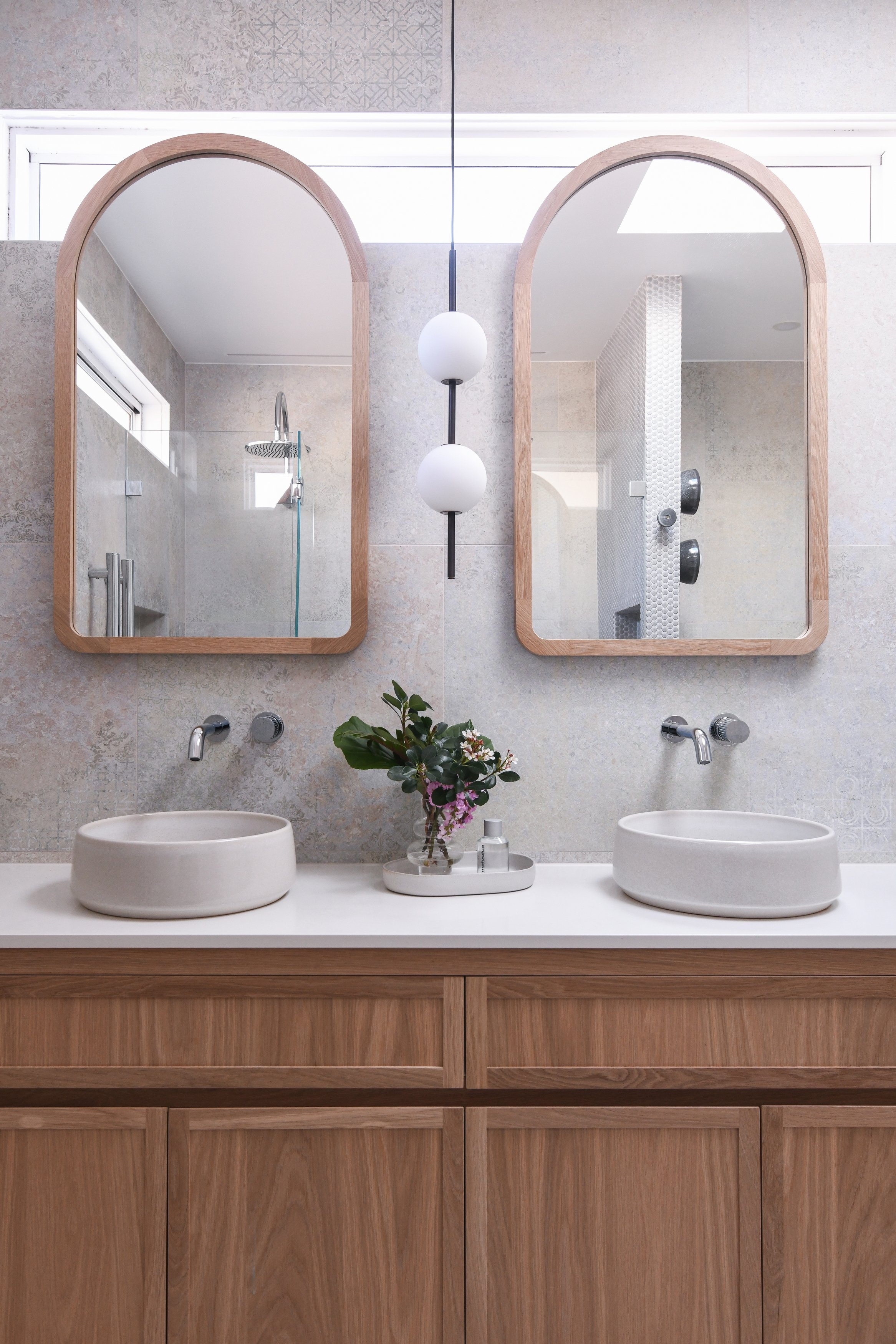
“The details are not the details. They make the design.”
tip #1: Out of sight
Sight lines are as important in a bathroom as they are in an overall floor plan. A sight line refers to the line of vision, or view, through a space to a focal point from an open doorway, hall or window. Most home owners will know to position the toilet away from an open door, both from an aesthetic as well as a privacy perspective. Don’t stop there though with your planning.
Think through what you will see when you open the door - is it the shower niche, or ledge, covered with random shampoo and soap bottles or is it a beautiful custom timber vanity with an entrancing natural stone benchtop and a softly rounded basin? Achieving the optimal layout may feel like completing several rounds of Tetris and require additional updates like shifting the doorway or swapping a hinged door with a cavity slider but it is well worth the effort to gain the perfect view in the end.
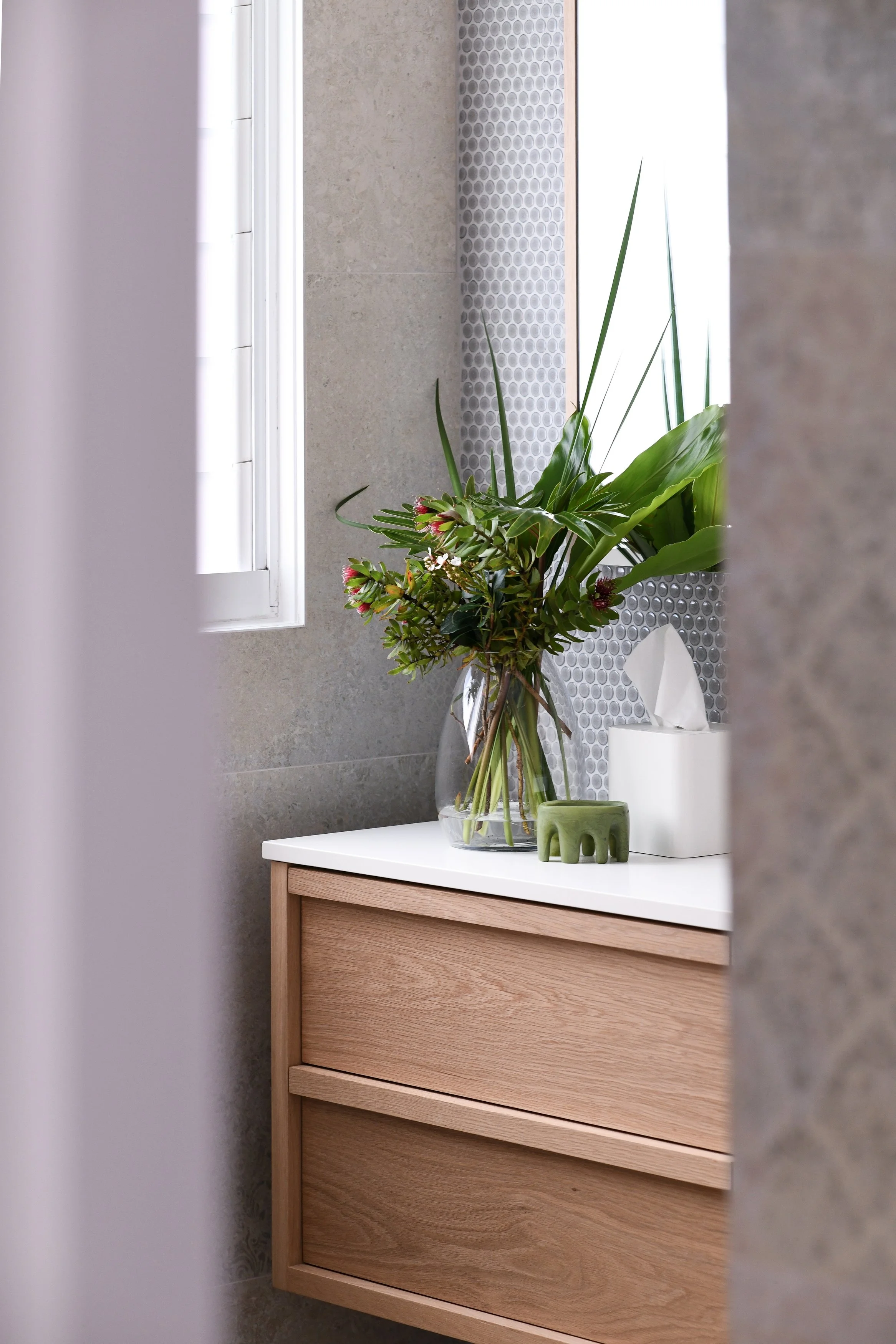
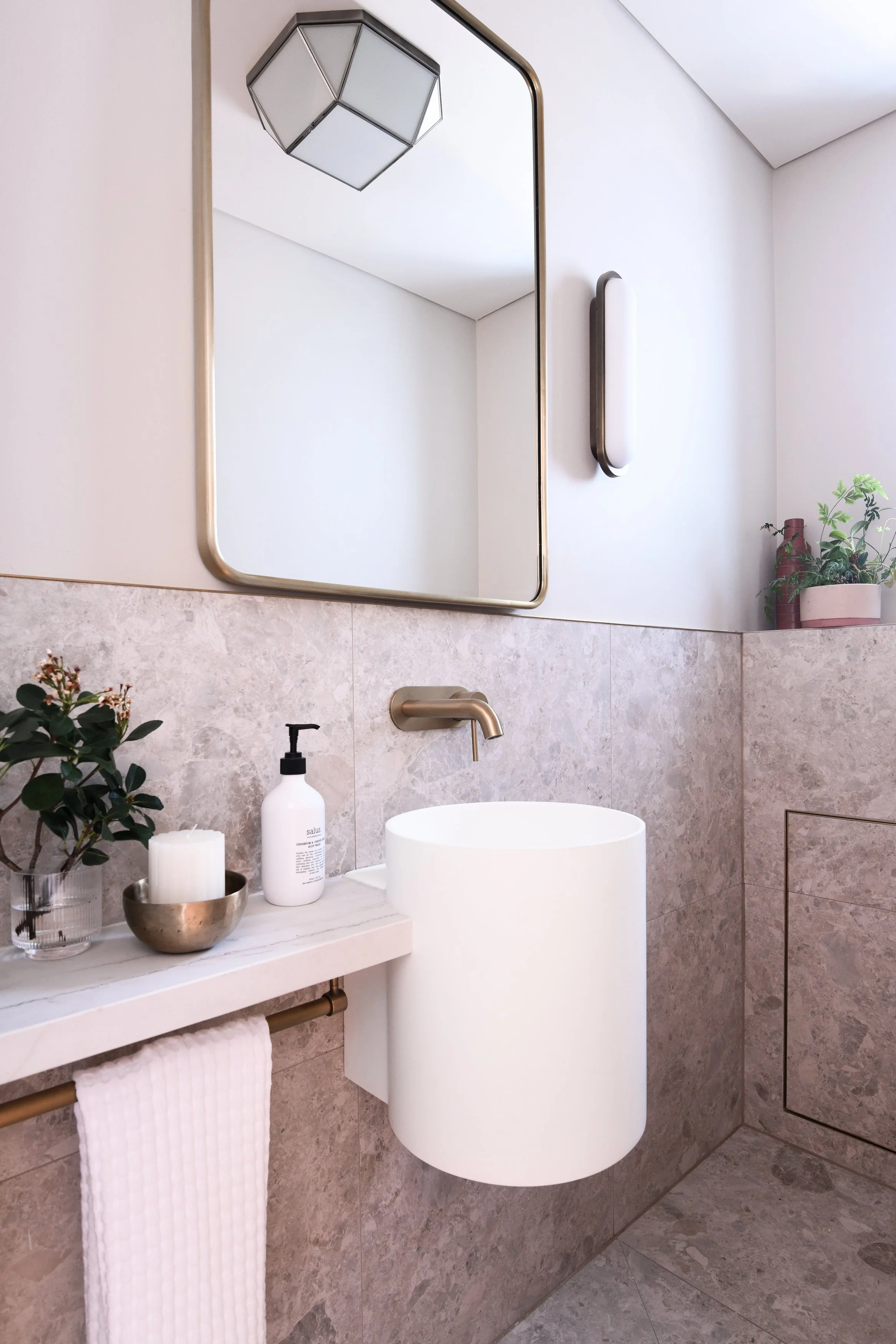
#2 - Design for life, not for instagram
Unless it’s a powder room where whimsy can win over being a workhorse, practicality and safety are a priority in bathrooms. We get it. Those Instagram images of chandeliers gently illuminating an elegant freestanding bath tucked into the corner of a luxurious marble bathroom are gorgeous but let’s unpack why this scenario is not necessarily viable, at least here in Australia.
Let’s start with lighting. Australia has strict regulations on the type of light fittings and where they can be placed within a wet area. (and, on power outlets too, for that matter). Before setting your heart on a designer pendant or decorative wall sconces that aren’t rated for use in a bathroom, speak with your electrician or lighting supplier and make sure their IP rating (a measure of their ability to resist water and dust) meets the required code.
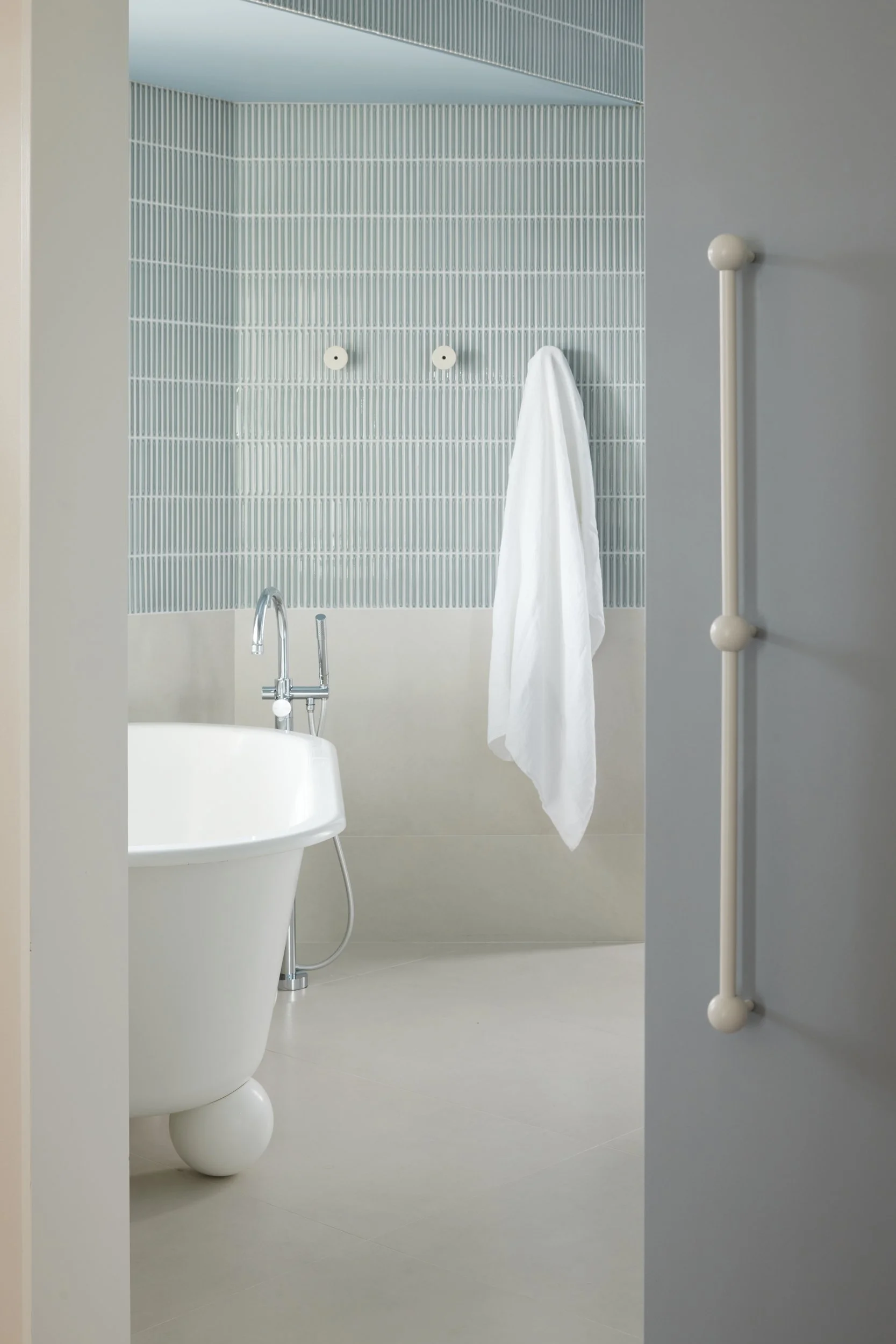
Like most people, we love a freestanding bath….when there is ample room for one. At a minimum, most designers will specify a distance of 100mm from adjacent walls to the bath simply so you have any hope of being able to clean around it. If this is all the space you have available and your heart is set on one, then by all means, go for it. But, freestanding baths look their best, and most luxurious, when they have room to breathe and this requires a generous footprint. If you don’t have this, consider building your tub in (or sinking it into the floor) and use tiling details to elevate it. Note, the need for adequate space doesn’t just apply to baths. If you’re planning for dual showers or double basins, make sure you have ample space to accommodate these too.
The final element of this scenario is the flooring. While there aren’t specific requirements for the slip rating of floor tiles in a residential bathroom in Australia you don’t want your bathroom to turn into an ice rink with every shower. If you do have your heart set on a polished stone tile, consider choosing the same stone in a mosaic pattern. The additional grout required for the mosaics will significantly improve the grip of your floor while showing off your stunning tile selection (bonus tip: opt for an epoxy grout to ease ongoing cleaning and maintenance).
TIP #3: lean into Layered lighting
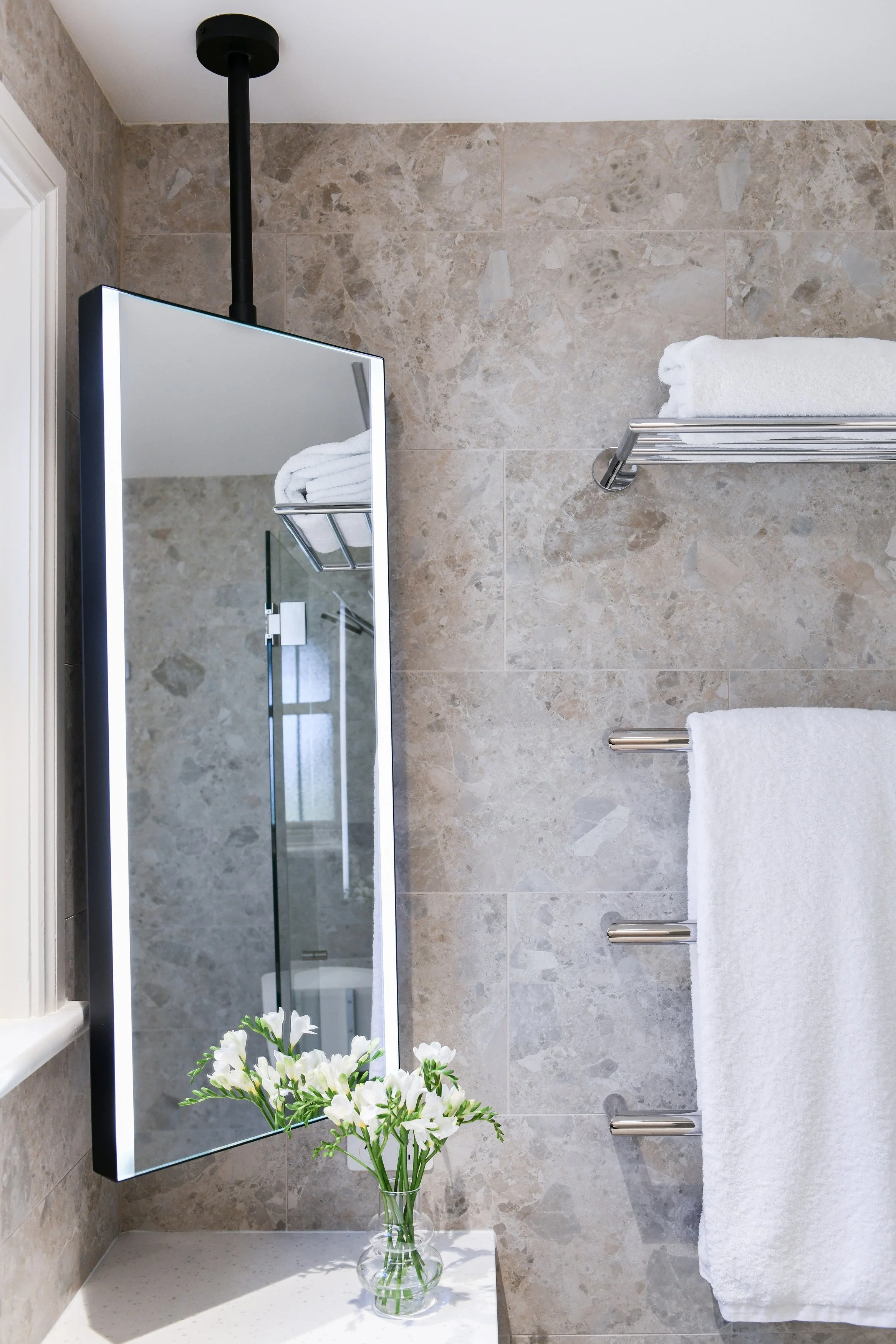
We touched on lighting safety above but bathroom lighting design deserves its own conversation. Whatever you do, avoid the all-in-one fan/light/heater option - they may seem practical and affordable but will they will kill your spa-retreat dreams faster than you can say IXL. Layered lighting, on the other hand, is the equivalent of a Jedi mind trick for your bathroom. It will elevate every moment and experience you have and add ease to your daily ritual.
Layered lighting allows you to manipulate the light sources to suit your needs and your moods. Think soft, diffuse light for relaxing baths, bright, shadowless light for applying make-up and getting a clean shave or a subtle hidden glow for finding your way in the middle of the night. Achieving this requires installing multiple light sources of different types controlled with separate switching and harnessing dimmers. Yes, there is an additional electrical expense for creating this flexibility but it can transform a simple bathroom design into a chic, hotel-like bathroom experience.
TIP #4: Grout Matters
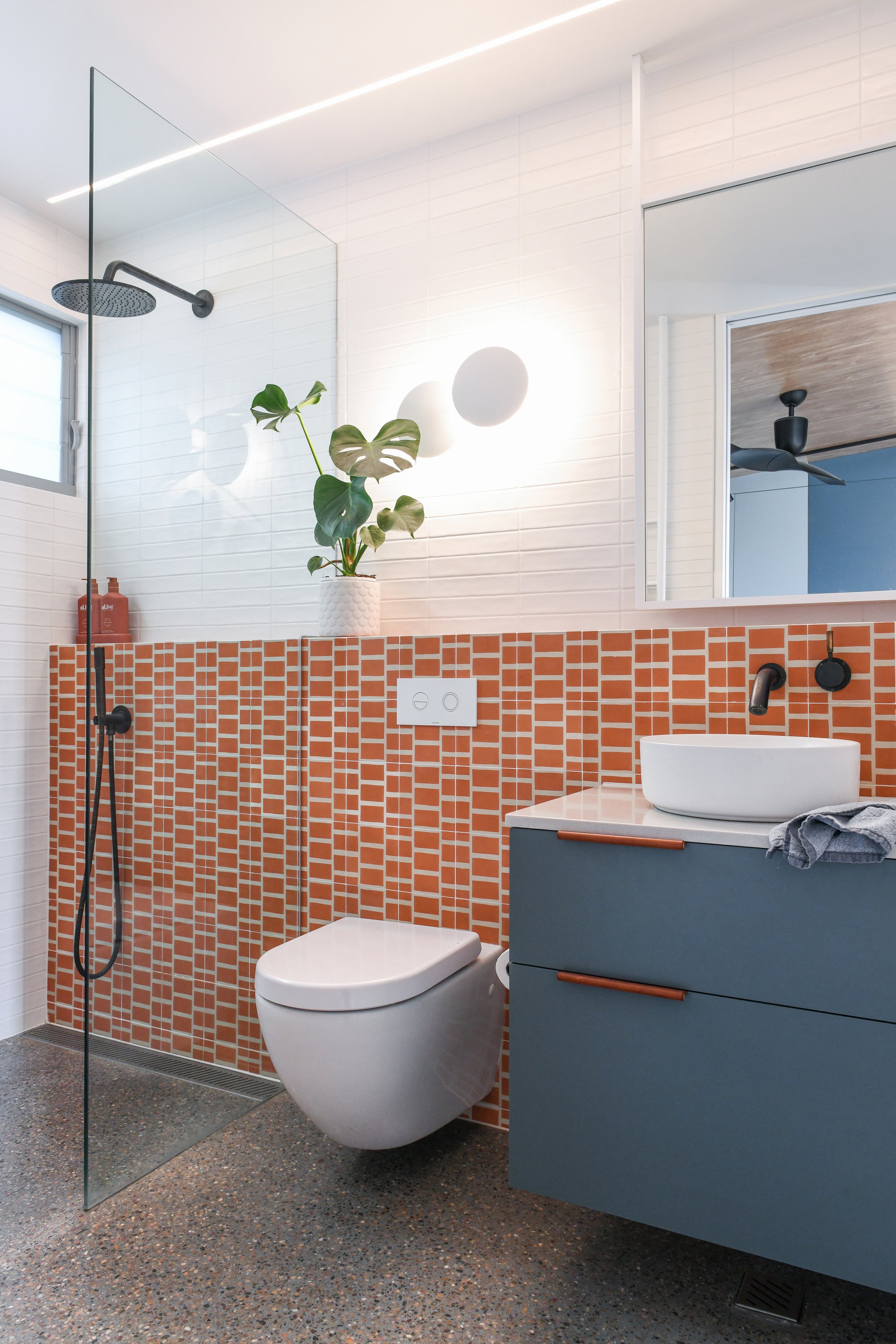
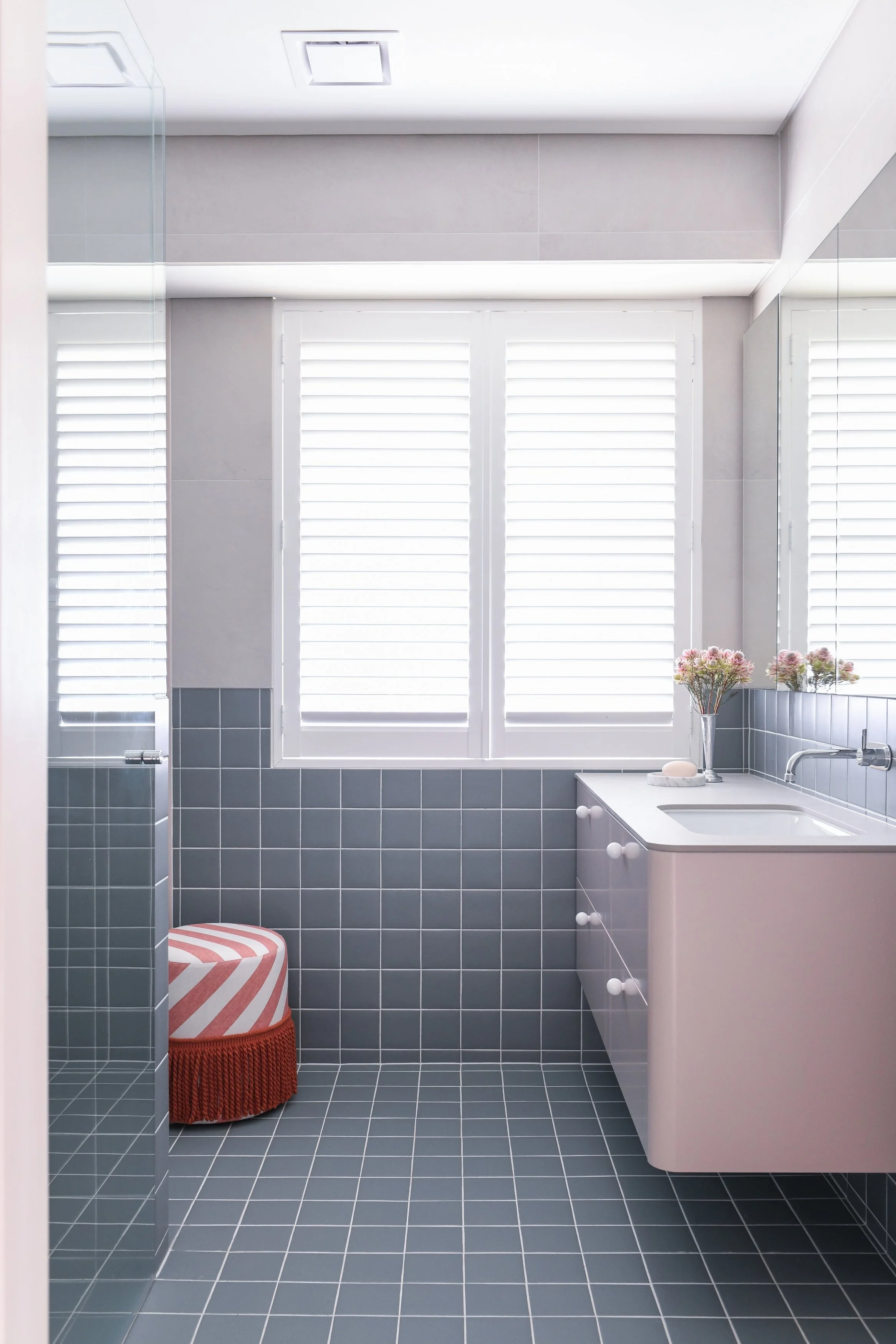
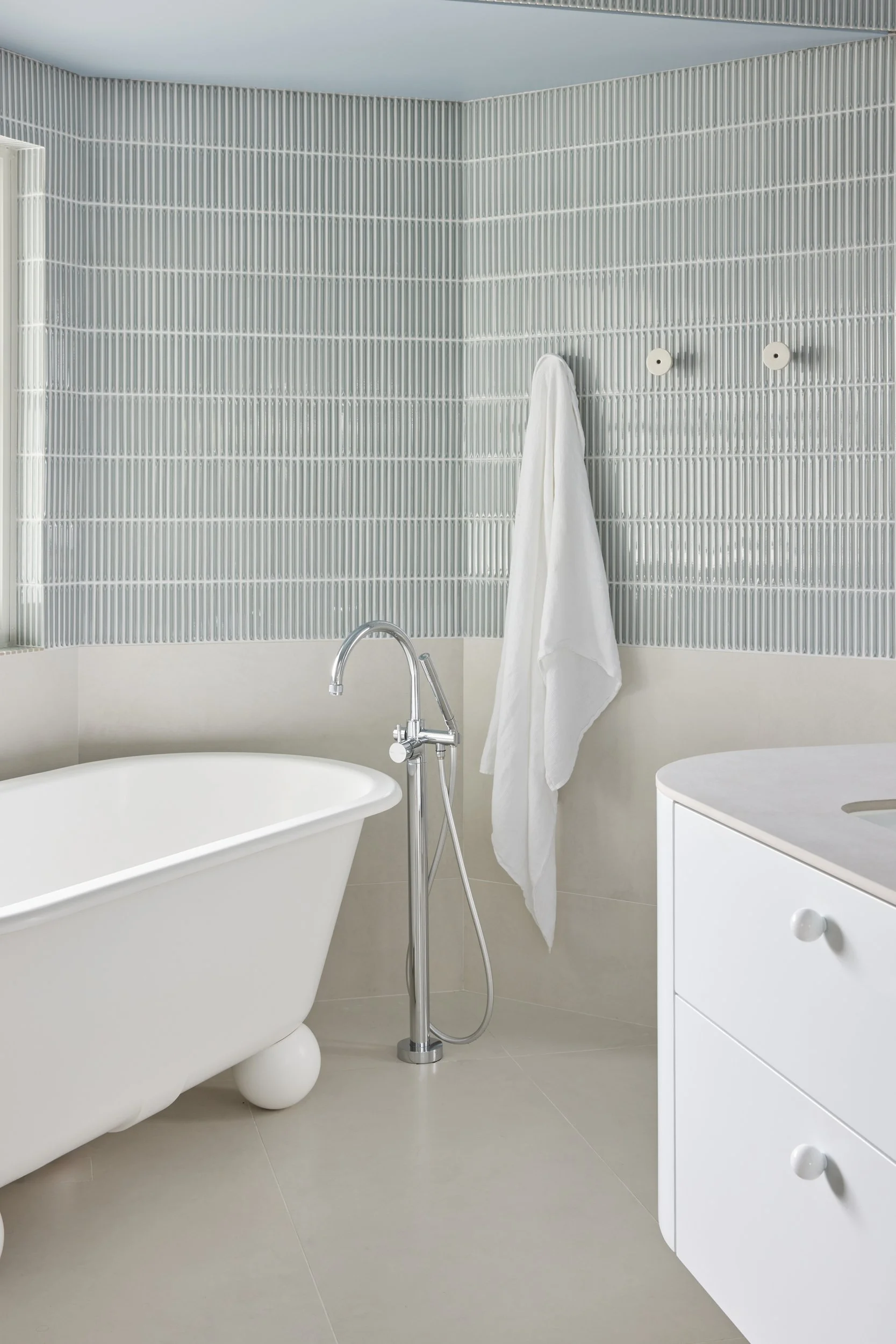
Grout is an important design element in your bathroom. Not only does it reinforce and support the installation of the tile and prevent moisture, dirt and debris from getting beneath the tiles but it has a significant impact on the overall look of your bathroom and the tiles selected. The most beautiful tile installation can be ruined by an unfortunate grout choice and, conversely, the most simple tile selection can be elevated by it. Think simple subways installed in a unique pattern that is highlighted by the choice of a contrasting grout or a playful, whimsical bathroom made more joyful with a boldly coloured grout choice. The point is to not leave your grout choice to the tiler or to the last minute. Choose it at the same time you are finalising your tile selection and make sure it’s clearly specified to your builder.
TIP #5: Make room for storage
Storage can often be overlooked in bathroom design. You don’t want to invest in a gorgeous ensuite to then drop a grey Brabantia bin next to your custom vanity or basket full of toilet paper in the corner next to the loo.
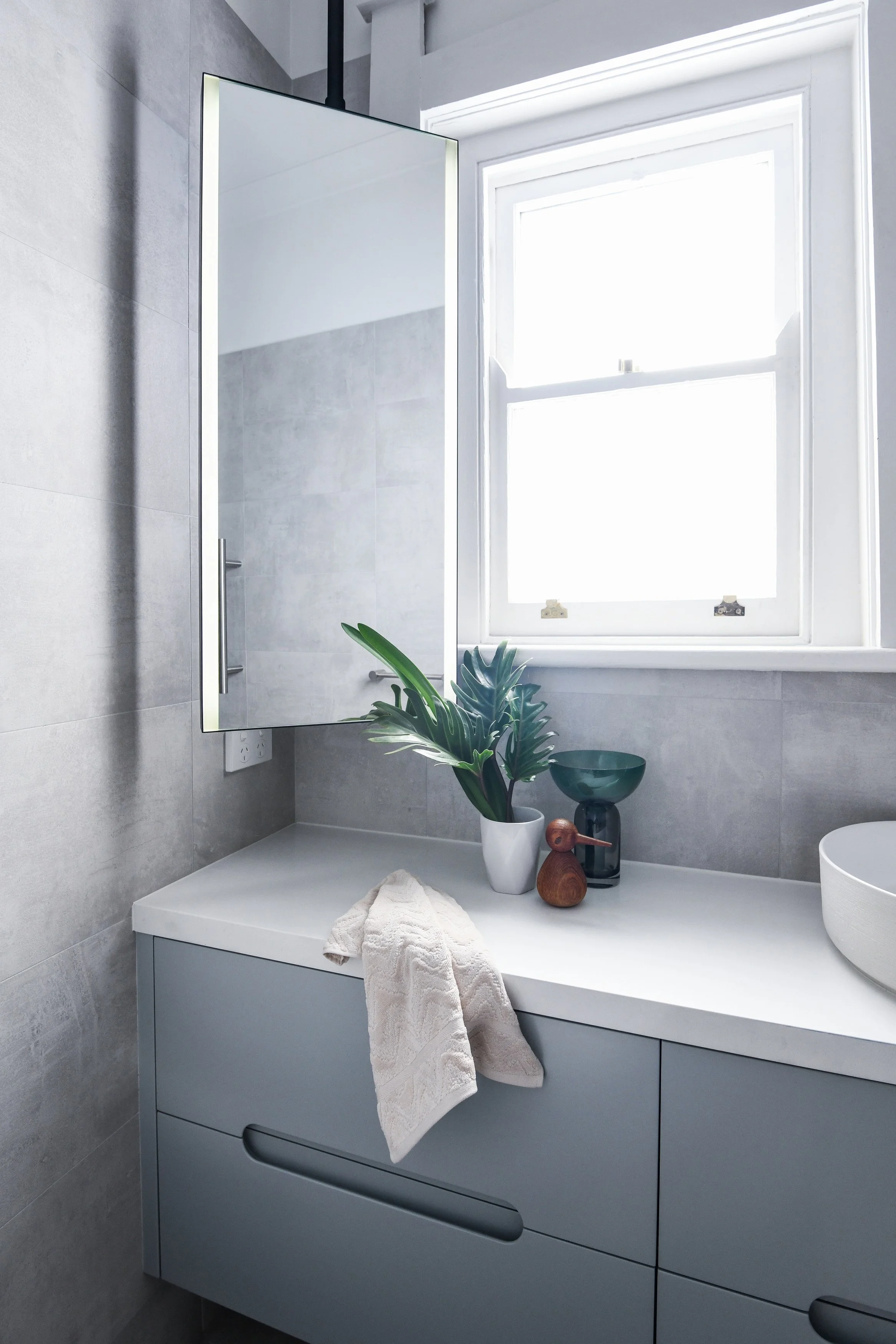
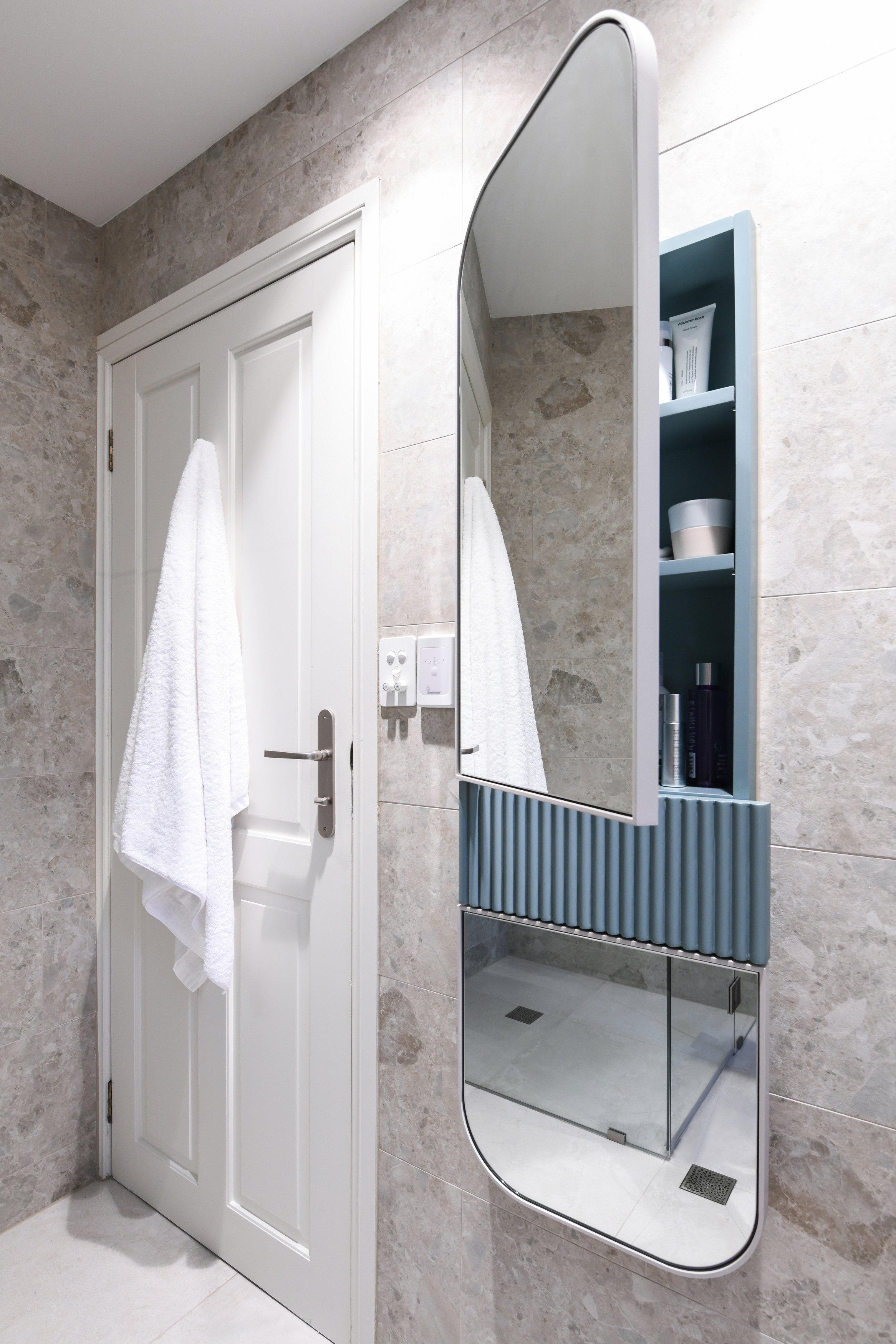
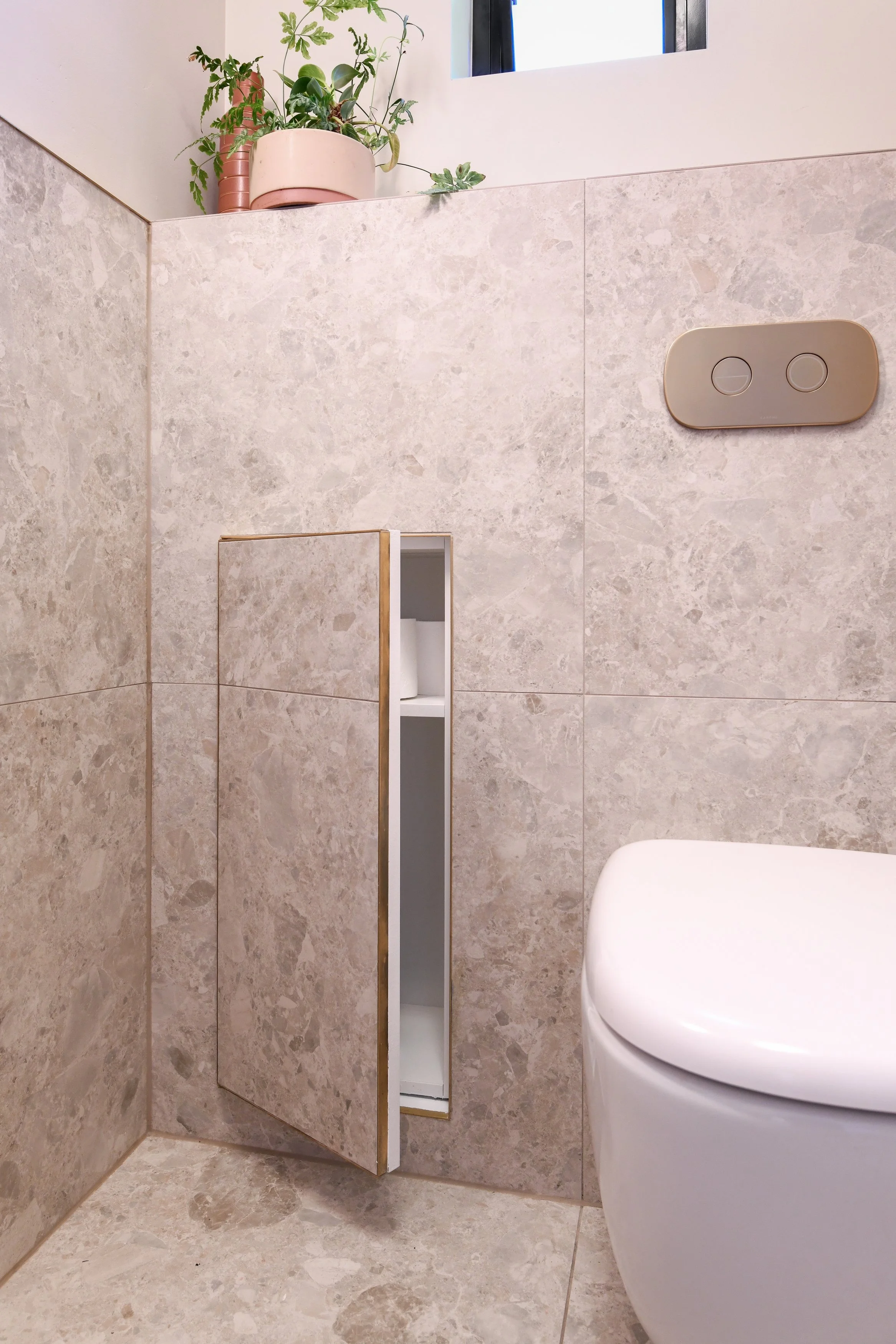
There are lots of ways to incorporate storage into your design. We’re big fans of recessed shaving cabinets for face-level storage of everyday skincare essentials, medications and toiletries and vanity storage for grooming equipment, cleaning supplies, the bin and, yes, toilet paper. But, if you’re eyeing off a sexy washplane in lieu of a large vanity you have options too. If space allows, consider including a wall-hung tall boy or, if not, recess a small cabinet into the wall next to the toilet for the toilet paper and toilet brush. The latter, clad in tile, will be hidden in plain sight and ensure you are never left facing a empty cardboard tube.
ready to renovate your bathroom?
If you’re ready to renovate your bathroom or ensuite but are feeling overwhelmed by the process, the sheer number of design options or both and would value expert advice, reach out to us today. We’d love to hear more about your project.
